





Red Light Rising is a United Kingdom-based company that designs and sells red light therapy devices for home and professional use. Founded in 2017, it positions itself as one of the earlier specialist brands in Europe focused on this form of light therapy. This guide explains the company background, the basics of red light therapy, the types of devices offered, practical considerations for potential users in the USA and UK, and important limitations so readers can evaluate the information for themselves.
Company Background
Red Light Rising was founded by James Strong and Bryan Gohl. According to the company’s own account, the founders turned to red light therapy after personal experiences with post-concussion symptoms and chronic joint pain. They established the business in 2017 with the stated aim of making devices more accessible for people interested in non-invasive approaches to wellness areas such as recovery, skin appearance, and sleep support.
The company is headquartered in the UK and primarily serves customers in the United Kingdom and Europe. It offers free mainland UK and EU shipping on orders and provides customer support features such as onboarding sessions. Product ranges include full-body panels, smaller targeted devices, wearable wraps, and related accessories such as circadian-friendly lamps and blue-light-blocking glasses. Many devices are described as using combinations of red and near-infrared wavelengths, with measured irradiance figures published on product pages.
For current product details, availability, and policies, visit the official site: https://redlightrising.com/.
Understanding Red Light Therapy
Red light therapy, also known in research contexts as photobiomodulation, involves exposing the body to specific wavelengths of red and near-infrared light. These wavelengths are typically in the ranges of approximately 600–700 nm (visible red) and 800–900 nm (near-infrared). The proposed mechanism centres on light absorption by components of the mitochondria, which may influence cellular energy production and signalling.
Research into photobiomodulation has examined potential applications in areas such as skin appearance, certain types of pain and inflammation, wound-related issues, and hair density. Some clinical and laboratory studies support effects under controlled conditions, particularly for specific indications. However, results can vary depending on wavelength, intensity (irradiance), dose, treatment duration, and individual factors. Consumer devices differ from medical-grade equipment used in many trials, so outcomes observed in research settings do not automatically transfer to every home-use product.
It is important to approach claims carefully. Red light therapy is generally considered low-risk when used as directed, but it is not a substitute for medical diagnosis or treatment. People with photosensitivity conditions, those taking photosensitising medications, or individuals with certain eye or skin concerns should consult a qualified healthcare professional before use.
Product Categories Offered by Red Light Rising
Red Light Rising organises its range around different use cases and coverage needs. Common categories include:
Full-body and large panels
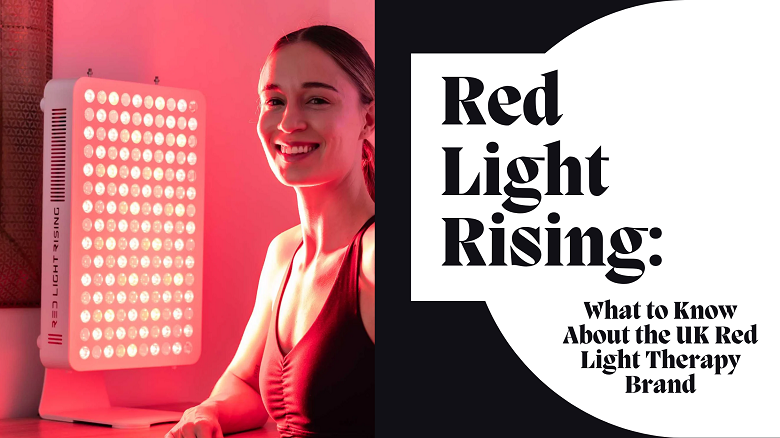
These are designed for broader coverage in a single session. Models may include multiple wavelengths (for example combinations of 630 nm, 660 nm, 810 nm, 830 nm, and 850 nm) and features such as independent controls for red and near-infrared output. Some higher-end panels offer modular connectivity or preset modes.
Targeted and handheld devices
Smaller units focus on specific body areas. These can be more portable and suitable for localised application.
Wearable wraps
Flexible, battery-powered options that can be positioned around joints or other targeted regions. These typically combine red and near-infrared LEDs and allow hands-free use for a set period.
Supporting products
Accessories such as bedside lamps that emit only selected red wavelengths (intended to minimise blue and green light in the evening) and blue-light-blocking glasses appear in the range. These are positioned around circadian rhythm and evening light exposure rather than therapeutic photobiomodulation panels.
The company publishes technical details such as wavelength mix and irradiance measurements on product pages and notes independent testing for some handheld units. Warranty periods and trial policies (including longer money-back windows on selected items) are also listed on the site.
Practical Considerations for Users in the USA and UK
Availability is strongest in the UK and EU, with free shipping promotions often applied to qualifying orders in those regions. Customers outside these areas may face higher shipping costs or limited direct fulfilment, so checking current delivery options on the official site is advisable.
When evaluating any red light therapy device, useful questions include:
- What exact wavelengths and irradiance levels does the device deliver at typical treatment distances?
- Are the measurements independently verified or published transparently?
- What is the recommended treatment time and frequency for the intended use?
- Does the device include eye protection guidance or accessories?
- What is the return policy and warranty coverage?
Consistency of use and realistic expectations matter more than any single session. Many protocols suggest regular short sessions over weeks rather than occasional long exposures. Combining light therapy with established healthy habits (sleep, movement, nutrition) is a more grounded approach than relying on any single tool.
Safety, Limitations, and Evidence Context
Photobiomodulation research continues to develop. Stronger evidence exists for certain clinical applications (for example, specific wound-care or mucositis contexts under professional protocols). Evidence for broader consumer claims around energy, recovery, or appearance is more mixed and often depends on study design, dosage, and population.
Potential limitations and precautions include:
- Individual responses vary; not everyone experiences noticeable changes.
- Overuse or excessively high intensity is not necessarily better and may reduce benefits in some laboratory models.
- Eye safety should be prioritised; follow manufacturer guidance and use protective eyewear when recommended.
- People who are pregnant, have active cancers, photosensitivity disorders, or take certain medications should seek medical advice first.
- Devices are not medical treatments for diagnosing or curing disease.
Reliable information can be found in peer-reviewed reviews of photobiomodulation and guidance from professional bodies. Consumer devices should be viewed as wellness tools rather than clinical interventions unless specifically regulated and indicated as such.
Frequently Asked Questions
What is Red Light Rising?
Red Light Rising is a UK company founded in 2017 that specialises in red and near-infrared light therapy devices for home and professional users. It offers panels, handheld units, wraps, and related accessories.
Is Red Light Rising the same as the book series?
No. The company name is unrelated to Pierce Brown’s Red Rising science-fiction novels or the book titled Light Bringer.
What wavelengths do Red Light Rising devices typically use?
Many of their panels and devices combine red wavelengths (around 630–660 nm) with near-infrared wavelengths (around 810–850 nm). Exact mixes vary by model and are listed on individual product pages.
Who might consider red light therapy devices?
People interested in non-invasive wellness tools for areas such as recovery support, skin appearance, or evening light management sometimes explore these devices. Results are not guaranteed and should be weighed against cost, time commitment, and individual health circumstances.
Are there any risks?
When used according to instructions, red light therapy is generally regarded as low-risk. However, eye protection, photosensitivity considerations, and consultation with a healthcare professional for those with medical conditions are important. It is not a replacement for medical care.
Conclusion
Red Light Rising provides a range of red and near-infrared light devices aimed at people interested in photobiomodulation for wellness purposes. Founded in 2017 by James Strong and Bryan Gohl, the company emphasises measured output, multi-wavelength options, and customer support focused on the UK and Europe. Understanding the basic science, device differences, safety considerations, and the limits of current evidence helps readers make informed decisions rather than relying on marketing claims alone.
Anyone considering a device should review technical specifications, trial and warranty terms, and personal health factors. For the most up-to-date product information and ordering details, visit https://redlightrising.com/.